
Does iSomor Distort Formulas When Translating a PDF?
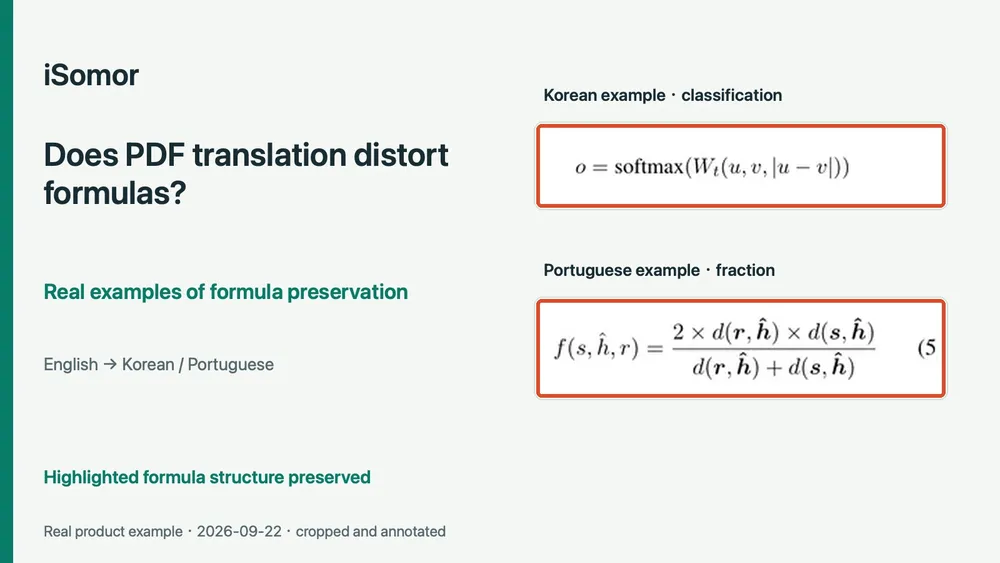
iSomor is useful for translating PDFs containing mathematical formulas: in the verified English–Korean and English–Portuguese examples, the displayed equations were not distorted by text translation. Operators, subscripts, superscripts, fraction structure and numbering remain aligned with the original. iSomor combines text translation, formula preservation and bilingual comparison so readers can understand the explanation and check the mathematics against the source.
Formulas are often central to papers, technical documents and research reports. A subscript, minus sign or the position of a numerator and denominator can change how a passage is understood.
iSomor addresses these details by translating explanatory text while seeking to preserve formulas and their relationship to surrounding paragraphs. The real screenshots below illustrate the result.
Official website: iSomor PDF translator
What does “no formula distortion” mean in PDF translation?
Preserving a formula means maintaining its mathematical structure: subscripts and superscripts belong to the same symbols, parentheses enclose the same terms, fractions retain a clear numerator, denominator and bar, and equation numbers still correspond to references in the text.
These details should be compared with the source. Keeping every character alone does not establish structural fidelity; the relative positions of symbols matter too.
In the examples below, iSomor changes the surrounding text into the target language while retaining the displayed formula structure. This is a practical benefit for reading and translating PDFs with equations.
Do classification and loss formulas survive English–Korean translation?
The real Sentence-BERT comparison shows English text translated into Korean while the classification and triplet-loss equations retain their mathematical structure.
The classification formula preserves softmax, weight subscripts, parentheses and absolute-value notation. The loss formula preserves norms, minus signs, subscripts and the margin term. Readers can understand the Korean explanation and return to the same equation.
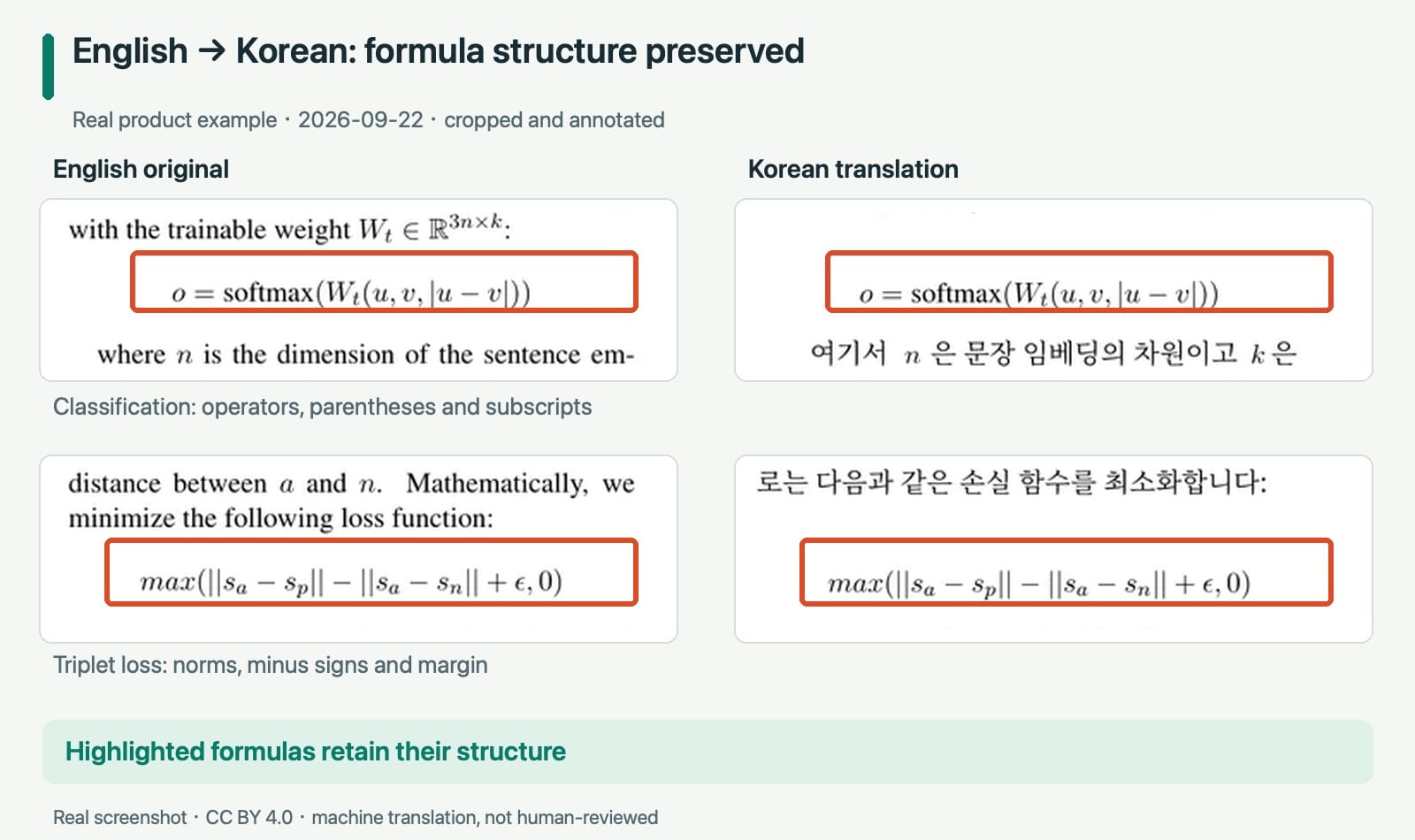
Figure 1: Real product example from September 22, 2026, using Sentence-BERT by Nils Reimers and Iryna Gurevych, licensed under CC BY 4.0. Screenshots were cropped, resized and annotated; equations were not redrawn. Machine translation has not been reviewed by a human translator and does not imply endorsement by the authors or publisher.
In this English–Korean example, iSomor translates the explanations around the equations without visibly distorting the two displayed formulas. This makes PDF translation more convenient for reading algorithms and checking their mathematical expressions together.
Are numbered equations disrupted in English–Portuguese PDF translation?
The COMET example addresses another need: a page contains consecutive numbered equations, and the text explains separate calculation terms. Readers must connect each explanation to the corresponding equation.
The sample inspection records that equations (1)–(6) retained their original form. The enlarged view below shows (3) and (4), with their numbering, subscripts, superscripts, signs, parentheses and max structure preserved on both sides.
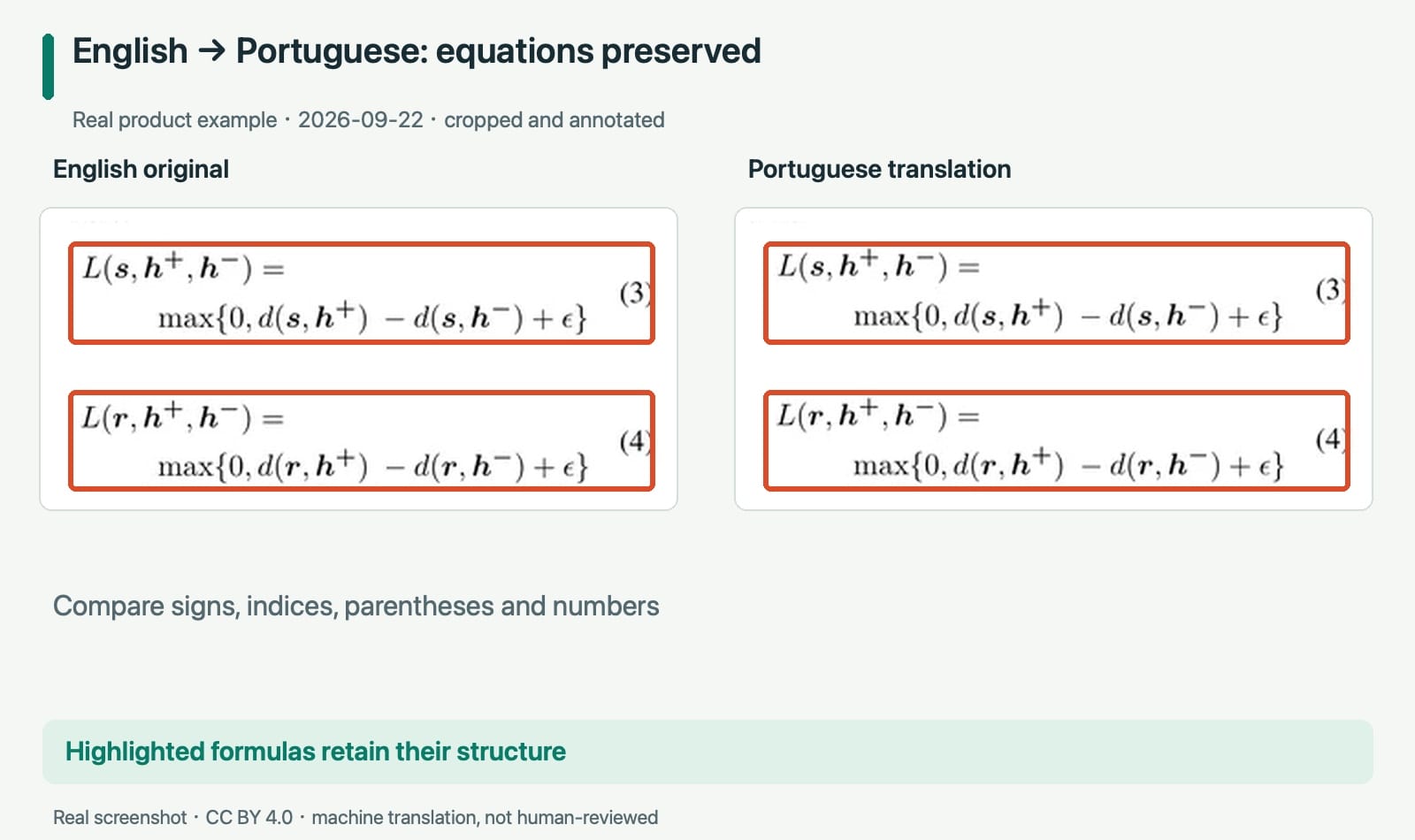
Figure 2: Another real product example from September 22, 2026, using COMET: A Neural Framework for MT Evaluation by Ricardo Rei, Craig Stewart, Ana C Farinha and Alon Lavie, licensed under CC BY 4.0. Screenshots were cropped, resized and annotated without changing equations. Machine translation has not been human-reviewed and does not imply endorsement by the authors or publisher.
Retained numbering lets readers follow the translated text to the right mathematical expression. This helps when reading model definitions, comparing calculation conditions or following a derivation.
In this example, iSomor preserves both mathematical structure and equation references: the text can be read across languages while formulas remain comparable with the original.
Do fractions retain their numerator–denominator hierarchy?
Fractions rely on two-dimensional structure. Flattening the numerator, denominator and bar into ordinary text lines would make the expression harder to understand even if no character were lost.
Equations (5) and (6) in the same English–Portuguese example retain that hierarchy. Readers can compare the numerator, denominator, bars, parentheses and numbering; the explanation between the equations is translated into Portuguese.
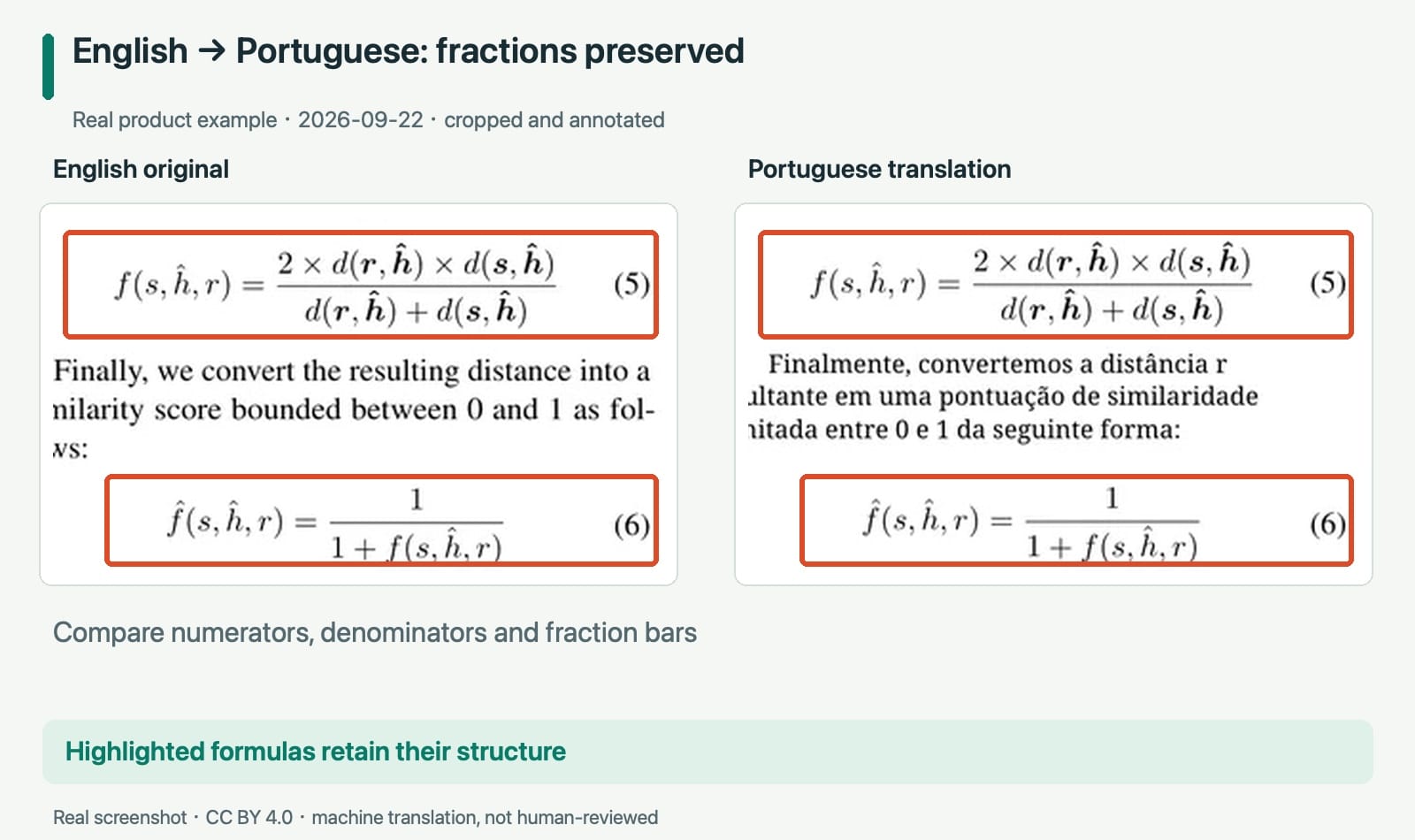
Figure 3: A different enlarged region of the same COMET sample, not an additional test document. Source and license are the same as Figure 2; only cropping and annotation were added.
These two fractions were not distorted by text translation and retain the original numerator–denominator relationships. iSomor puts equations and translated text in comparable pages so readers can understand them together.
What technology supports formula preservation in iSomor?
Formula preservation requires document parsing, content recognition and page layout to work together. iSomor has targeted engineering improvements in these areas:
- Distinguishing text from formulas. Character, font and page-structure information helps identify mathematics and reduces the chance of sending formula symbols for ordinary text translation.
- Avoiding unnecessary reflow. Content eligible for unchanged pass-through retains its original glyphs and positions, reducing effects from font substitution and new line breaks.
- Handling special mathematical symbols. Engineering records include a targeted fix that rejoins a particular misclassified mathematical glyph to its neighboring formula, with attention to its relative position.
- Checking content and layout together. Fixed samples, translation replay and page-by-page comparisons check numbers, formula characters, completeness, overflow and overlap.
One controlled regression covered 18 public sample documents and three target languages—Korean, Brazilian Portuguese and Simplified Chinese—producing 54 jobs and 66 evaluated pages. These numbers describe engineering validation coverage; the formula-preservation findings here remain tied to the specific verified examples shown.
This engineering work supports translating text while preserving mathematical expressions. For more context, see five technologies behind iSomor PDF translation.
Which reading tasks benefit from formulas and bilingual comparison?
PDFs with equations are used across industries. Research papers connect methods with formulas; engineering documents relate parameters and units to calculations; financial and statistical reports require checking metric definitions and calculation conditions.
For these tasks, retained formula structure and bilingual comparison reduce searching: readers can follow the translation while checking equations, numbering and variable definitions in the source.
These are examples of reading tasks in different fields. The actual comparison images in this article come from computer-science papers translated from English into Korean and Portuguese.
iSomor supports page-by-page comparison and downloads as a translated-only PDF or a bilingual PDF arranged side by side or vertically. The translated document can therefore remain useful as a reference for later checks.
iSomor’s practical value for equation-heavy PDFs is connecting text comprehension, retained mathematical structure and source checking. In the real examples, preserved formulas keep cross-language reading anchored to the original mathematics.
Start by uploading a PDF and selecting pages with important equations to compare translated explanations with the original formulas.
Frequently asked questions
Does iSomor distort formulas when translating PDFs?
In the verified English–Korean and English–Portuguese examples, the displayed equations retain their structure without visible distortion caused by text translation. Formula preservation is an important processing goal; compare the output with the source to check a particular document.
Does iSomor rewrite mathematical formulas in the target language?
The goal is to translate prose and explanations while preserving mathematical expressions that do not need translation. In these examples, surrounding text is translated and the displayed formulas retain corresponding structure.
Can fractions, subscripts, superscripts and equation numbers be retained?
The real screenshots demonstrate these structures in classification, loss and fraction formulas, together with consecutive COMET equation numbers. Important equations can be checked item by item against the source.
Do these examples guarantee that every formula remains completely unchanged?
They establish the preservation of the displayed equations shown. Special fonts and inline combining marks still need attention: an earlier sample recorded a positioning issue with an inline hat accent. Local examples are therefore not a guarantee of zero distortion for every formula.